

"Sustainable" is the most worn-out word in marketing. You can slap it on headphones that have recycled plastic in the packaging and a glued-in battery inside. This guide was written by a headphone maker, so we are biased. We'll still tell you what's worth asking, and also where others do things better than we do.
The most sustainable headphones are the ones you don't have to buy again
Much of the environmental footprint of electronics is created during manufacturing. That's why materials matter less than how many years the same pair of headphones stays in use. A bamboo shell won't help if the battery is glued in and the whole thing goes in the bin when the battery wears out. Headphones you can't repair aren't a product. They're a subscription.
Five questions before you buy
1. Can the battery be replaced? The battery wears out first. If it can't be replaced, the headphones last exactly as long as the battery.
2. Can you buy the ear pads separately? Ear pads wear out fastest. A good sign is that you can swap them yourself without tools.
3. Will the manufacturer repair them after the warranty, and for how much? The warranty lasts a couple of years, the headphones hopefully longer. Ask for the price up front. "Request a quote" usually means that new ones will be cheaper.
4. Are spare parts available? Repairability is just talk if the parts aren't sold to anyone.
5. What happens to your old headphones? Does the manufacturer take old pairs back, and does it sell refurbished used ones? Keeping things in circulation beats a new product in recycled cardboard.
Where others do well
Fairphone's Fairbuds XL were designed to be repairable from the start, and you can replace the battery and parts yourself. That's good work, and we'll say so out loud. House of Marley, on the other hand, focuses on materials such as bamboo and recycled plastics. In the flagship models of many big brands the battery is glued in, and servicing in practice means swapping the unit for a new one.
How we do it
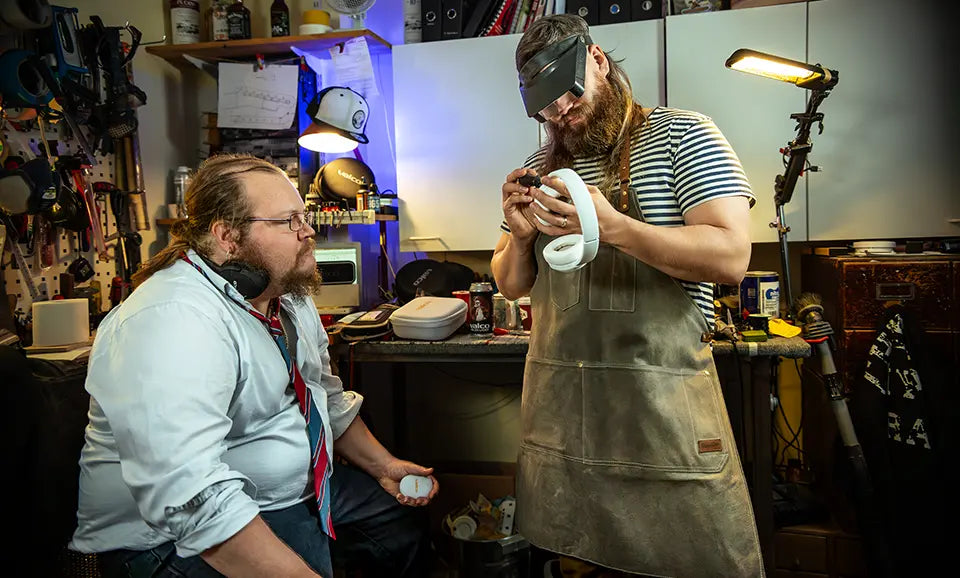
Repair for €69, also after the warranty. Our repair service in Kajaani fixes VMK series headphones for a fixed price that includes labour, spare parts and shipping both ways within the EU. Battery, ear pad or circuit board, the price is the same. A repair typically takes about a week.
You swap the ear pads yourself. Replacement ear pads cost €29.90–34.90, and you can change them at the kitchen table.
Used headphones and trade-in. Refurbished used headphones start at €109 with a 24-month warranty. Old VMK20 and VMK25 headphones get you a €50 trade-in credit when you buy new ones.
Two-year full warranty. If the headphones break on their own during that time, the repair costs nothing.
For the longer maths on when a repair pays off and when it doesn't, read should you repair your headphones or buy new ones.
What we don't do
Honesty obliges. NL25 earbuds can't be repaired, because a screwdriver doesn't fit inside an earbud. A faulty pair is replaced under warranty, and broken ones are recycled for spare parts. Nordell speakers come with a two-year warranty, but they are not repaired after the warranty. Our goal is that in the future all our products will be repairable. We started with headphones because they make up the bulk of our sales.
And yes, we also have a greenwashing campaign: the goal is to plant a tree for every pair of headphones sold. It's greenwashing, and we admit it. The trees still grow.
Frequently asked
Do you repair other brands' headphones? No. They weren't designed to be opened, and we don't have spare parts for them.
Is sustainable the same as eco-friendly? Not quite. Eco-friendly usually refers to materials, sustainability to how long the product stays in use. With headphones, the latter matters more.
Is it worth buying used? If they've been serviced and come with a warranty, yes. You get the same headphones for less, and nobody has to manufacture a new pair. The Death Star gets built a bit slower, but that's our problem.
Share with friends
Should You Repair Your Headphones or Buy New Ones?
Best earbuds 2026: an honest buyer's guide